Here’s what I know about artificial intelligence: more and more. Here’s what I know about what happens when a powerful new technology meets a complex organization: an entire career’s worth. I spent three decades running food and grocery companies as the internet, ERP, ecommerce and warehouse automation rolled in. From my vantage point, the human systems required the most optimization, every time.
Flashback 1 — as a recent college grad and plant manager, I was assigned to run a production facility for Frito-Lay. My get-to-know-you process included working on the line when I could, running the fryers and packaging machines alongside my operators. My thinking was, how could I improve a process if I hadn’t done it myself? Eventually, I think I may have even been the best fryer operator on the second shift.
Flashback 2 — years later, at a corporate HQ, my team needed to analyze years of daily route sales data. The problem was, our scatterplot showed nothing — literally, no things. Zero relationship between routes and performance. So we kept asking questions until we realized we’d been reading the data wrong. Once we reframed the analysis, we found an equation that predicted route performance with 88% accuracy. The answer was there the whole time. Even with the latest technology, it still took people who knew the work — because they’d actually done it — to recognize that something was off.
I believe AI will deliver real value in our industry. The question is, when? And how? Are we framing our questions right, considered and shaped by a prepared mind?
From my experience, the best investment is always people before platforms. Along with that comes a requirement of organizational maturity to absorb change, not just at launch but on an ongoing basis to use new technology and drive growth.
Who remembers computer-assisted ordering (CAO)? The technology dates to the 1980s and got a lot better in the 1990s. But it wasn’t until the mid-2000s that it was broadly adopted. The technology had always been sound, pretty much ready on Day One to deliver results. Or at least, that’s what I saw the two times I helped roll it out. But it required trust, otherwise managers would simply override the system. For fresh produce, I remember hearing, can you trust an algorithm? That’s something managers had to see it in celery to believe the promise. Otherwise, it was just hype.
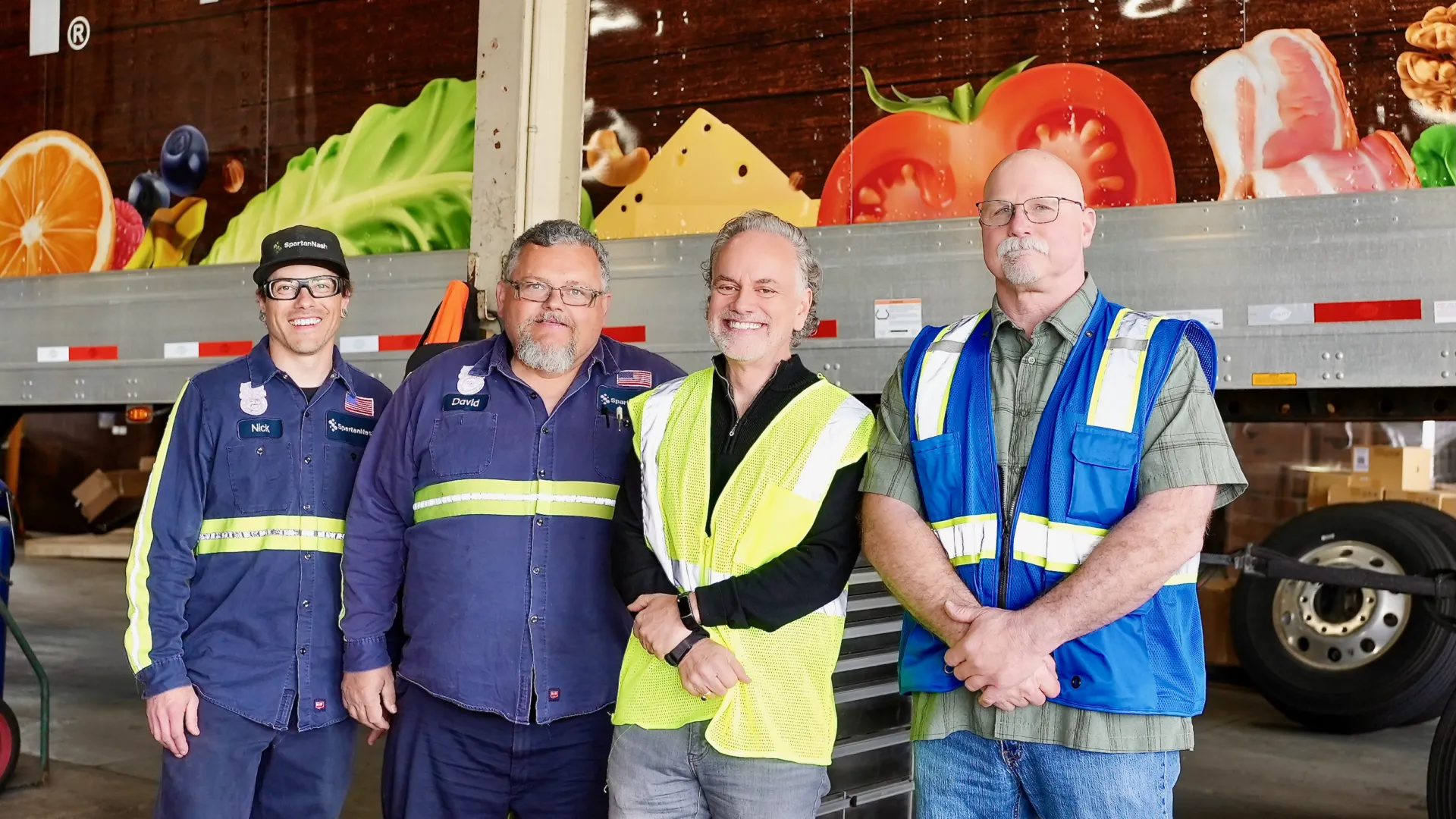
Much of the AI conversation today skims over IRL realities such as fresh celery or route realities. How many truck drivers can drive their trucks from the comfort of their home? How many cashiers, forklift operators, warehouse selectors and field salespeople can phone it in? Most people in an industry like ours never have the option of working remotely. They come in. They do physical work. They serve real customers face-to-face. And that’s not going to suddenly stop because of AI.
When I hear about companies scrambling to develop an AI strategy, I think first about the people with their hands — literally — on the business. Sure, there’s already technology that supports their work. Now along comes AI, which is a couple steps removed from daily business, hands-on jobs. So I’m asking, where are processes working and where are they not? In that gap, there will be AI opportunities.
Business leaders right now are under enormous pressure, much of it self-inflicted, to be part of the AI story. They’re listening to Wall Street, knowing what analysts reward. It’s not a stretch to say that in this environment, there’s even a bit of shaming if you aren’t using a whole bunch of different AI tools. Rolling out a new transportation management system? Hey, slap an AI tag on that. Might be basically the same tool everyone’s used for a decade, but with a slick new interface, that must be AI. Right? No, probably not. The gap between what companies say they’re doing with AI and what they’re actually doing is … wide.
People ask me whether AI will transform work more like the internet or more like enterprise resource planning (ERP) did. My honest reaction is that it’s not really like either. That would be like asking whether a T-Rex is more like a rose or a clover. You can’t neatly map one technological wave onto the next. Each one is different. But human systems persist, in both their complexity and their promise.
In the food and grocery business, many waves such as CAO or ERP digitized existing processes. For all of us, the internet gave us a new view of the world. AI, I believe, is going to give us a new view of ourselves. Eventually. Possibly sooner rather than later — but only when people and organizations are ready.
AI will keep evolving, and so will the pressure to chase whatever’s new and loud. But the companies that win won’t be the ones with the flashiest AI slide in their investor decks. The winners will be the ones that know exactly what work matters, who does it and how to make those people more effective. That’s the real intelligence nobody’s talking about.